Uncategorized

Before My Grandmother Passed Away, She Handed Me a Rusted Key – What I Found in Her Old Wardrobe Changed Everything I Believed About My Identity

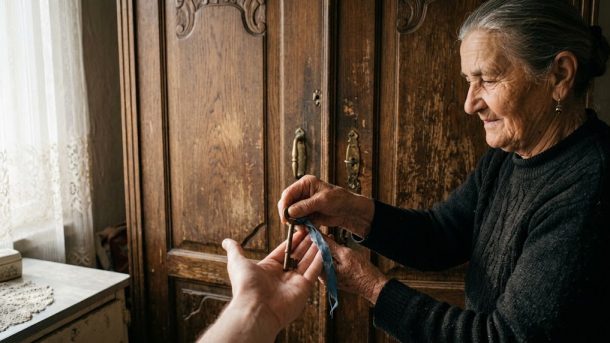
My grandmother was a woman of quiet gestures and deliberate silence. In her final days, with monitors softly beeping beside her bed, she pulled my hand close and pressed a cold, tarnished brass key into my palm. “When the house falls quiet, unlock the cedar cabinet in the attic,” she whispered. “That is where your story actually began.”

Days after the funeral, when the front door closed on the last visitor, I climbed the attic stairs. The lock gave way with a dry snap. Inside sat an embossed leather folder tied with faded blue ribbon, containing international birth records, stamped immigration forms from 1978, and a handwritten ledger of debts quietly settled decades ago.

My mother hadn’t simply been raised by this family; she had been sheltered and adopted in secret following a regional crisis that wiped out her entire bloodline. Every quiet sacrifice my grandmother made—every penny saved, every long shift—was tied to an unspoken vow to protect an orphaned infant. Sitting in the dust motes of that attic, the truth sank in: family isn’t merely the blood you carry, but the quiet, enduring choice to protect someone with your entire life.

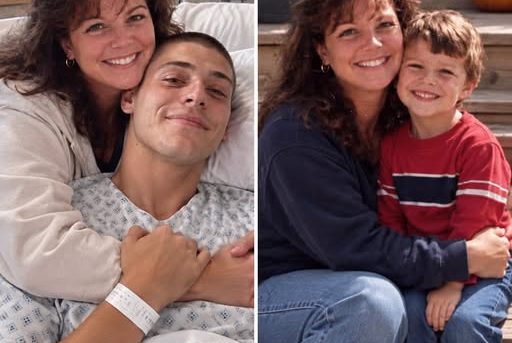
TV Star’s Wife Dies Unexpectedly At 48

The news hit like a punch to the chest. One moment, a life full of plans and laughter. The next, silence. Fans of *Maine Cabin Masters* are reeling as Matt “Dixie” Dix faces an unthinkable reality: the sudden loss of his wife, Ginna, at just 48. Tributes are pouring in, memories collidingIn the wake of Ginna Dix’s sudden passing, the world around Matt “Dixie” Dix has grown unbearably quiet. The woman who once filled cabins, beaches, and hospital corridors with warmth is now held in the fragile space of memory. Friends like Ryan Eldridge have stepped forward with stories that span from childhood to shared fame, sketching a portrait of a life woven deeply into their own. Their grief is layered with gratitude, each recollection a way of insisting she is not gone, only transformed into legacyBeyond the television spotlight, Ginna’s life was defined by care and commitment: a fierce high school athlete, a devoted nurse practitioner, a partner who grew alongside Matt through decades of marriage. Her absence leaves a hollow place in family gatherings, hospital halls, and quiet coastal walks. As her loved ones ask for privacy, the message that remains is simple and aching: she mattered, deeply, to so many.

Visible Veins: What They Usually Mean (and When to Talk to a Doctor)

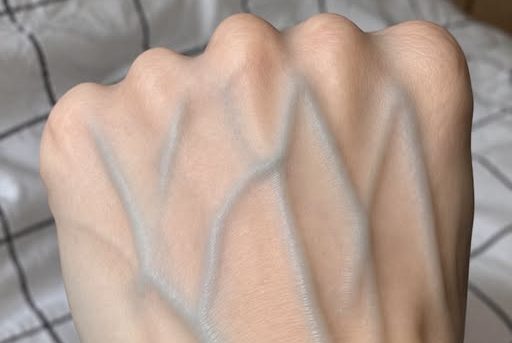
Noticing your veins bulging under your skin can feel like a quiet alarm going off in your body. One day they seemed faint; now they’re sharp, blue lines you can’t unsee. Is it fitness… or a hidden threat? As your body changes—through weight loss, aging, workouts, or heat—your veins can shift from invis… Continues…

Visible veins often reflect your body’s story more than a brewing crisis. Losing body fat, building muscle, and staying active can all pull veins closer to the surface, especially in the arms, legs, and hands. Warm weather, hot showers, and even a long day on your feet can temporarily make them stand out. Genetics and age add another layer: some people are simply wired for more pronounced veins, and thinner, mature skin makes them easier to see without meaning anything is wrong.

What matters most is how those veins feel, not just how they look. Pain, throbbing, swelling, warmth, or sudden color changes around a vein are signals you should never ignore. Numb, cold fingers or toes, or slow-healing sores, deserve prompt medical attention. Trust your instincts—visible veins are usually normal, but if something feels off, getting checked is an act of self-respect, not overreaction.

Sarah Palin and Todd Palin: The End of a Marriage That Lasted More Than Three Decades

Sarah Palin seemed unbreakable. For years, she and Todd projected the image of a rugged, unshakable Alaska power couple – five kids, big politics, bigger spotlight. Then, after three decades together, everything quietly cracked. No explosive press conference. No tell-all interview. Just a sealed file, a few lines in a court docket, and a marri… Continues…

For more than thirty years, Sarah and Todd Palin’s lives were intertwined with each other and, eventually, with American politics. They married long before national cameras ever found them, building a family in Alaska while Sarah’s political career rose from local office to the governor’s mansion and, finally, the 2008 vice-presidential campaign. To many watching from afar, they appeared inseparable, their marriage a constant amid the chaos of public life.

Yet their story ended in a surprisingly quiet way. In 2019, Todd filed for divorce, citing incompatibility of temperament after 31 years of marriage. The case was largely sealed, and by late March 2020 the marriage was legally over, without a public spectacle. Much about their private reasons remains unknown, and that absence of detail matters. It reminds us that behind every headline is a family navigating change, and that sometimes the truest account is simply a recorded timeline and two people moving on.

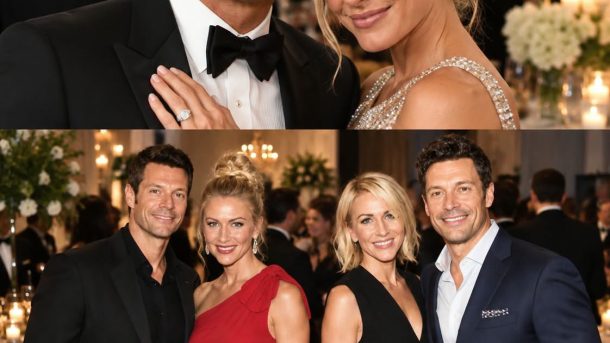
Delinda Rood Solves the Bonus Round in Seconds—Leaving Ryan Seacrest and the Crowd Stunned

The room went silent before it even had a chance to get loud. Under the glare of studio lights, with the Bonus Round clock ready to drain every nerve, Delinda Rood did something almost no one does on America’s Game—she ended the suspense before it could begin. One glance. One breath. One lightning-fast answer that left Ryan Seacrest blinking in disbelief, the audience erupting, and viewers rewinding the moment over and over onli… Continues…

Under pressure that usually rattles even the most seasoned contestants, Rood never seemed to flinch. She’d played the entire game with quiet control, building her total with steady choices instead of flashy risks. By the time she reached the Bonus Round, her focus was sharp, her nerves steady, and the stakes unmistakable: one last puzzle, one last shot to transform a strong performance into an unforgettable victory.

When the final phrase appeared, there was no visible panic, no scrambling for possibilities. Rood locked onto the letters, trusted her instincts, and delivered the solution almost instantly, cutting through the usual drawn-out drama. The studio burst into cheers as Seacrest reacted to just how fast she’d cracked it. Walking away with $65,650 in cash and prizes, she didn’t just win big—she created a moment fans kept replaying, a calm, brilliant flash in a game built on suspense.

Before My Son Passed Away, He Donated His Heart to an 18-Year-Old Girl – After the Transplant, Her Mother Handed Me a Letter from My Son

Mom, there’s something you need to know about her. Those were the last words my son wrote to me, delivered by the mother of the girl who now carried his heart. I thought it was about my dead husband’s secret daughter. I thought it was about betrayal. I was wrong. The truth was cru… Continues…

I walked into Rebecca’s house certain my husband had hidden an entire second family. Instead, I learned he’d ruined a man named Michael—his partner, Rebecca’s husband—and then spent eighteen years quietly paying for a mistake he never had the courage to confess. The money I’d imagined funding a secret child was guilt and responsibility, funneled to the widow and daughter of the man everyone believed was a thief. A lie my husband let stand until the day he died.

But Ethan knew the truth. He found the transfers, tracked Rebecca down, met Lily while she was dying, and chose—if fate and medicine allowed—to give his heart to the girl whose father his own had destroyed. He protected Daniel’s memory as long as he could, and he protected me from the full weight of it until he was gone. Now, when I look at Lily, I see all of them: the man my husband really was, the man he wanted to be, and the boy who decided that the only way to make any of it bearable was to turn our family’s worst secret into someone else’s second chance at life.

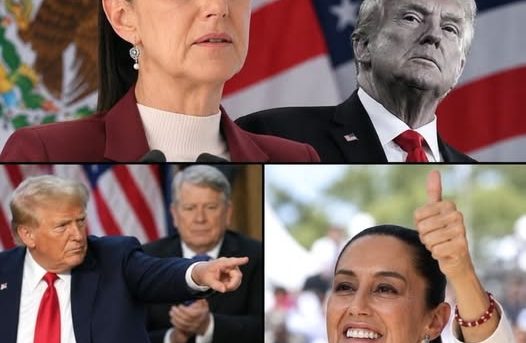
Wow! Mexico President? US

The warning shots have already been fired.
What began as a legal designation has spiraled into the most dangerous U.S.–Mexico confrontation in decades. Drone strikes, terrorist labels, economic retaliation, and a furious Mexican president vowing to fight back in court and in public opinion. As Washington hardens into a “with us or against us” mindset, the future of North American stability hangs by a thr… Continues…

Trump’s 2026 decision to brand Mexico’s most powerful cartels as foreign terrorist organizations detonated the old model of “quiet cooperation.” Overnight, a drug war became a war on terror, with all the legal firepower that label unlocks. Asset freezes and material-support prosecutions were only the beginning; the quiet deployment of surveillance and strike drones inside Mexican territory signaled a darker possibility. Elon Musk’s musings, as head of DOGE, about precision drone strikes on cartel leaders no longer sounded like science fiction, but like the soft launch of a new cross-border doctrine.

From the National Palace, Claudia Sheinbaum drew a red line around Mexican sovereignty, insisting that collaboration could not mean submission. Her counteroffensive—targeting U.S. gun makers as accomplices to “terrorist” violence—flipped the accusation back across the border. Surrounded by parallel crises, from the Epstein archive to Middle East escalation, Washington framed its stance as moral clarity. In reality, both nations now stand locked in a high-tech standoff where any miscalculation could turn a legal designation into a regional conflagration.

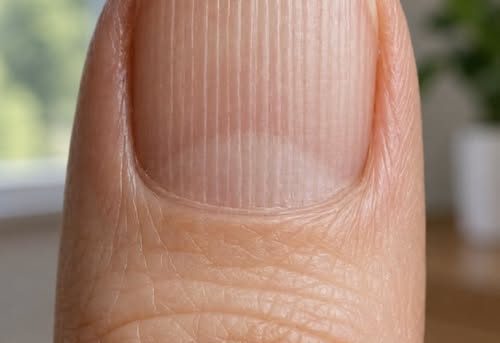
If you have lines on your nails, it means you have ca…See more

This thumb shouldn’t feel this unsettling—but it does. Every ridge, every groove, every microscopic shadow feels like a confession pressed into keratin. It looks so ordinary, yet impossibly precise. Clinical, but intimate. Beautiful, but faintly unnerving, like a quiet diagnosis you didn’t know you were waiting for. You stare, wondering what your own nails might be trying to whis… Continues…

Frozen in this extreme close-up, the thumbnail stops being just anatomy and becomes a quiet record of passing years. The pale-pink translucence, the neatly drawn cuticle, and the flawless vertical ridges speak less of disease and more of time: a body working, aging, repairing, leaving soft signatures instead of scars. The corduroy-like texture is not a warning siren, but a whisper that the nail matrix has simply slowed, the way skin eventually folds into wrinkles.

What makes the image so affecting is how gently it turns science into emotion. The soft, diffuse light, the shallow focus, and the warm, neutral backdrop strip away distraction, forcing you to confront a single, ordinary truth: change is constant, and often quiet. In this one thumbnail, you see not just health, but continuity—a small, ridged testimony that your body has been faithfully carrying you, cell by humble cell, all along.

He isn’t the first to say this 😳.

Seeing Earth from space shattered him.
Ron Garan left as an astronaut and came back carrying a burden most of us never feel. Up there, the borders vanished. The wars, the markets, the noise—all looked small. What didn’t look small was the fragile, paper-thin shield keeping us alive. That’s when he saw what humanity is really doin… Continues…

From the quiet darkness of orbit, Ron Garan watched Earth turn, again and again, until the familiar world below became something entirely different. The thin blue line of atmosphere, barely a glowing whisper against the black, stopped feeling like scenery and started looking like the only life-support system we have. The planet wasn’t a map of nations anymore; it was a single, fragile, living home.

That view forced a reckoning. The arguments over borders, profits, and power seemed painfully small compared with the risk we’re taking with the only habitat we know. Garan returned convinced that our obsession with short‑term economic gain is blinding us to the natural systems quietly holding everything together. His message is simple but urgent: if we could all see Earth the way he did, we might finally act like crewmates on the same ship, instead of passengers fighting over seats.