Uncategorized

Mary J. Blige’s Ex Wanted Her to Pay—His Shocking Demand Has Fans Asking How This Happened

Kendu Isaacs’ Divorce Demands From Mary J. Blige Still Raise Eyebrows Years Later

When Mary J. Blige’s marriage to Kendu Isaacs collapsed, the divorce proceedings quickly became one of the most talked-about chapters in the singer’s personal life. What made the situation even more striking were the financial requests reportedly made by Isaacs during the legal battle.

Isaacs, who had worked as a music manager and had been married to Blige for years, sought spousal support from the Grammy-winning singer. The request drew considerable attention because the breakdown of their marriage involved allegations of infidelity and growing mistrust between the couple.

The financial dispute did not stop there. Isaacs also reportedly sought child support connected to children he had with another woman. That detail became especially controversial because Blige was not the mother of those children, making the request a particularly unusual part of an already complicated divorce.

Another request added even more attention to the case. Isaacs reportedly asked for a monthly allowance of $5,000 to help support his parents. The demand became a major talking point because it placed additional financial expectations on Blige while the former couple was already fighting over the terms of their separation.

For Blige, the divorce represented much more than a financial disagreement. The singer had built a successful career through decades of music, but the end of her marriage brought intense public scrutiny and difficult personal moments. Her relationship with Isaacs had lasted more than a decade, and their split unfolded under the watchful eye of fans and entertainment media.

The case also highlighted how complicated celebrity divorces can become when personal relationships, money and family responsibilities collide. Requests that might remain private in an ordinary separation can become headline news when the people involved are internationally recognized stars.

Blige eventually moved forward with her life and career after the divorce, continuing to release music, perform and expand her work in entertainment. Isaacs, meanwhile, largely remained associated with the highly publicized legal battle surrounding their marriage.

Looking back, the financial demands reportedly made during the divorce remain one of the most memorable aspects of their split. The story continues to attract attention because of the unusual combination of spousal support, child-support claims involving children from another relationship, and a monthly request for parental assistance.

The unusual requests became a lasting footnote in a divorce that had already captured public attention across entertainment media.

Ultimately, the divorce showed just how complicated separating two lives can become when years of marriage, money and family obligations are involved. For Mary J. Blige, the chapter eventually became part of a larger story about rebuilding, moving forward and reclaiming her life after a highly publicized marriage.

Shaquille O’Neal Spotted Enjoying A Yacht Day In Spain — And The Viral Dating Claim Has Fans Talking

Photos showing NBA legend Shaquille O’Neal enjoying time aboard a luxury yacht in Spain have resurfaced online, creating a fresh wave of discussion about the woman seen alongside him.

A viral caption claimed that Shaq, who was 52 at the time of the post, had been traveling with a 21-year-old girlfriend. However, the story circulating online appears to leave out important context surrounding the photographs.

The images are actually from 2019, when O’Neal was 47. There is also no reliable confirmation establishing that the woman pictured was his girlfriend or that she was 21 years old.

According to reports from around the time the photographs originally appeared, the woman was identified as model Danielle Dilworth. Some coverage placed her age at approximately 27, making the viral description considerably different from the original reports.

The pictures themselves show O’Neal enjoying a relaxed day on a yacht, surrounded by other people. The group appears to be spending time together in a sunny setting, with several photographs capturing the former basketball superstar laughing and enjoying the trip.

As often happens with celebrity images, however, an old photograph can suddenly become popular again when it is paired with a dramatic caption.

Social media users quickly began discussing the alleged relationship and focusing heavily on the apparent age difference. Some questioned the claim, while others simply reacted to the photos without realizing that they were several years old.

O’Neal has maintained a relatively private approach to much of his personal life despite being one of the most recognizable figures in professional basketball. His dating history has generated plenty of public interest over the years, but not every woman photographed with him has been confirmed as a romantic partner.

That distinction matters when viral posts present speculation as established fact.

In this case, the photographs are real, but the caption attached to them does not appear to tell the complete story.

The resurfaced images are therefore less about a new relationship announcement and more about how quickly old celebrity photographs can be repackaged for social media.

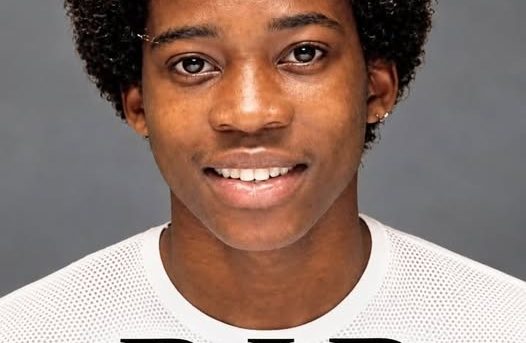
RIP: Musical Youth drummer Freddie Waite Jr. dies at 55

Frederick “Freddie” Waite Jr, the original drummer for British-Jamaican reggae band Musical Youth, has passed away at age 55.

Pictured clockwise, from bottom left: Michael Grant, Freddie Waite Jr., Patrick Waite (1968 – 1993), Dennis Seaton and Kelvin Grant.

A rep for the band confirmed his death in a statement on social media Thursday. “We are sad to announce the passing of Musical Youth’s drummer Frederick Waite Jr. Our thoughts go out to him and his family during this sad time. We have lost a musical legend, who inspired many young musicians over the last 40 years. Rest in Eternal Peace.”


Musical Youth is best known for their international hit song “Pass the Dutchie” (1982). The song was No. 1 in 7 countries and went platinum in Canada. “Pass the Dutchie” peaked at No. 10 on the US Billboard Hot 100 chart.

Waite Jr. was just 12 years old when he formed the Musical Youth with his brother, Patrick Waite (bassist) who died in 1985. They recruited the Grant brothers, Kelvin on guitar and Michael on keyboards. Vocalist Dennis Seaton joined the band later as frontman.

Musical Youth found a new generation of fans when their classic single was featured on the US TV series Stranger Things season 4.

The group disbanded in 1985 and returned in 2001 as a duo.

Remembering Kobe Bryant (1978–2020)

Kobe Bryant remains one of the most recognizable figures in basketball history, remembered for his extraordinary skill, relentless competitiveness and deep connection with the Los Angeles Lakers.

Born on August 23, 1978, in Philadelphia, Pennsylvania, Bryant grew up around basketball. His father, Joe “Jellybean” Bryant, was a former NBA player, and Kobe spent part of his childhood in Italy while his father played professional basketball overseas. That experience helped shape his understanding of the game, and he eventually returned to the United States with ambitions of reaching the NBA.

After graduating from Lower Merion High School, Bryant entered the 1996 NBA Draft and was selected 13th overall before being traded to the Los Angeles Lakers. At just 18 years old, he became one of the youngest players in NBA history at the time.

Bryant quickly developed into a major star. Playing alongside Shaquille O’Neal, he helped lead the Lakers to three consecutive NBA championships in 2000, 2001 and 2002. Their partnership became one of the defining stories of the NBA during that era.

After the Lakers’ championship run with O’Neal ended, Bryant continued building his own legacy. He became known around the world as the “Black Mamba,” a nickname that represented the intensity and determination he brought to basketball.

His famous “Mamba Mentality” eventually became bigger than basketball. Bryant frequently emphasized preparation, discipline, persistence and learning from failure. Those principles resonated with athletes, entrepreneurs, students and fans around the world.

One of the most memorable moments of his career came in January 2006, when Bryant scored 81 points against the Toronto Raptors. It remains one of the highest-scoring individual performances in NBA history.

Bryant later captured two more championships with the Lakers, winning titles in 2009 and 2010. He was also an 18-time NBA All-Star, a two-time Finals MVP and the 2008 NBA Most Valuable Player.

In 2016, Bryant retired from professional basketball after scoring 60 points in his final NBA game.

His life was tragically cut short on January 26, 2020, when a helicopter carrying Bryant and eight others crashed in Calabasas, California. Bryant was 41 years old. His 13-year-old daughter, Gianna, was also among those who died.

The tragedy sparked an extraordinary worldwide outpouring of grief. Fans, athletes and public figures remembered Bryant not only for his accomplishments on the court, but also for his dedication to his family, creativity and work beyond basketball.

Years after his death, Bryant’s influence remains visible throughout sports and popular culture. His career continues to inspire generations of athletes, while the principles associated with his Mamba Mentality remain part of his enduring legacy.

Woman D!es After Containing Bacteria By Eating Alfac…

A “Healthy” Food Became The Center Of A Serious Health Investigation

She believed she was making a healthy choice. The meal was fresh, natural, and carefully prepared—but according to the story circulating online, what followed was anything but ordinary.

A sudden illness reportedly began with fever and severe abdominal pain. Her condition then deteriorated rapidly, eventually requiring emergency medical treatment.

The story claims investigators later focused on contaminated sprouts as a possible source of a dangerous bacterial infection.

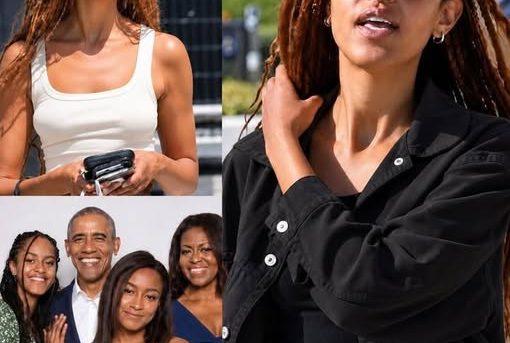
20 Minutes Ago in Los Angeles: Malia Obama Quietly Builds Her Own Path in Hollywood

🌴 Los Angeles, CA — A New Chapter, On Her Own Terms

While many people still recognize Malia Obama as the eldest daughter of Barack Obama and Michelle Obama, she is increasingly gaining attention for something entirely her own: a growing career in the entertainment industry.

Rather than relying on her family’s public profile, Malia has been steadily working behind the scenes in film and television, focusing on storytelling, writing, and creative development. Industry observers have noted her dedication to learning the craft and building experience through professional projects.

This isn’t a celebrity “launch.” It’s a deliberate, thoughtful journey—one that prioritizes skill over spotlight, craft over clout, and substance over sensationalism.

Let’s explore what we know about Malia Obama’s path in Hollywood, why her approach matters, and what it teaches us about building a career on your own terms.

Large Dog’s Unexpected Reaction at Busy Market Leaves Everyone Stunned

A woman is on the ground. A powerful husky towers over her. For a split second, everyone thinks the same terrible thing. Shouts, phones raised, vegetables crushed under frantic footsteps. A man sprints into frame, grabbing at the dog, trying to pull it away as shoppers freeze in disbelief. The clip ends before anyone knows if this was aggression, protec… Continues…

What unfolded in that crowded outdoor market was more than just a viral clip; it was a collision of fear, confusion, and unanswered questions. One angle shows a woman on the ground, a large husky looming over her, while stunned bystanders decide whether to help or just keep filming. Scattered tomatoes and broken produce turn the scene into something that looks almost staged, yet the tension feels painfully real.

My Best Friend Spent Years Caring for My Sister with Down Syndrome – Then He Said a Few Words That Changed Everything I Thought I Knew

My sister was fighting for her life when her husband handed me a contract that shattered everything I believed. I had spent years questioning why my best friend married Rosie, but nothing prepared me for our parents’ signatures beside a six-figure payment. Then Ben revealed what they had planned for her, and why our perfect family hid something unth… Continues…

Will Smith and Jaden Smith Challenge the Rules of Modern Masculinity Posted onOctober 9, 2026 BytoniNo Commentson Will Smith and Jaden Smith Challenge the Rules of Modern Masculinity

Will Smith and Jaden Smith Challenge the Rules of Modern Masculinity

The photo did more than appear on social media. It exploded into the conversation.

One frame. Two men. A father and son standing side by side in bold Versace looks, seemingly unconcerned with the invisible rules that have long dictated how men – especially Black men are expected to dress, behave, and present themselves to the world.

The image immediately became the kind of photograph people could not simply scroll past. Some praised it. Others mocked it. Some admired the confidence and creativity behind the styling, while others questioned why a father and son would choose to dress in a way that challenged traditional ideas of masculinity.

But as the initial reactions faded and timelines moved on to the next viral moment, something more meaningful remained.

The clothes were never really the whole story.

What made the photograph so striking was the tension it exposed between self-expression and social expectation. It raised a much bigger question about why men are so often encouraged to make themselves smaller, quieter, tougher, and less emotionally expressive in order to fit an image of what “real masculinity” is supposed to look like.

For Will and Jaden, the photograph offered a very different possibility.

It suggested that masculinity does not have to be one-dimensional. A man can be confident without being intimidating. He can be stylish without worrying that fashion will make him appear less masculine. He can embrace softness without surrendering strength. And perhaps most importantly, he can allow himself to be seen without constantly worrying about whether everyone else approves.

More Than Just an Outfit

At first glance, it would be easy to reduce the entire moment to fashion.

The bold prints. The unconventional silhouettes. The confidence of two people wearing something that refuses to blend into the background.

But reducing the photograph to clothing misses the larger idea behind it.

Fashion has always been more than fabric. What people wear can communicate identity, confidence, culture, creativity, rebellion, and even vulnerability. Clothing can become a language, particularly when someone chooses a style that does not conform to expectations.

That is part of what made the photograph so memorable.

The image did not ask for permission.

There was no attempt to soften the message or make the outfits more acceptable to people who preferred something more traditional. Instead, the styling appeared to embrace individuality completely.

And that can be uncomfortable for people who have spent their lives learning that certain forms of self-expression are acceptable only for certain people.

For men, those expectations can be especially rigid.

From childhood, many boys are taught—sometimes directly and sometimes indirectly—that they should be tough, restrained, competitive, emotionally controlled, and visually conservative. Certain colors are considered “too feminine.” Certain clothes are considered inappropriate. Certain gestures, poses, or expressions are treated as signs that a man is somehow stepping outside the boundaries of masculinity.

The photograph quietly challenged all of that.

When Softness Becomes a Statement

Perhaps one of the most interesting aspects of the image was its sense of softness.

Not weakness.

Softness.

The two are not the same.

For generations, society has often presented strength and tenderness as opposing forces. Men are expected to be strong, while tenderness is frequently associated with vulnerability. Yet real life is far more complicated.

A person can be strong and gentle at the same time.

A father can be protective without being emotionally distant. A son can be confident without pretending to be invulnerable. A man can care deeply about appearance, art, fashion, beauty, and self-expression without having to apologize for any of it.

That is why the photograph resonated beyond the clothes themselves.

It represented a version of masculinity that did not depend entirely on armor.

There was no need to appear hardened. No need to perform toughness for the camera. No need to prove strength through aggression or emotional distance.

Instead, the message was communicated through presence.

Here we are. This is how we choose to express ourselves.

And sometimes, simply making that choice publicly can be powerful.

A Father and Son Seen Through a Different Lens

There was also something significant about the fact that the photograph featured a father and son.

Family images often come with their own expectations. A father and son are frequently imagined through familiar stereotypes: the older generation teaching the younger one how to be strong, responsible, disciplined, and “manly.”

But this image suggested another kind of relationship—one in which individuality could be shared rather than suppressed.

Instead of presenting masculinity as a strict set of rules passed down from one generation to the next, the photograph opened the door to something more flexible.

A father and son could stand together while expressing themselves differently.

They could share confidence without needing to look identical.

They could embrace fashion, creativity, and individuality without treating those qualities as incompatible with strength.

That makes the image feel less like a simple fashion moment and more like a snapshot of changing attitudes between generations.

Younger men today are increasingly willing to question ideas that previous generations may have accepted without much discussion. They are more comfortable discussing mental health, personal identity, emotional vulnerability, fashion, beauty, and self-expression.

That does not mean every old definition of masculinity has disappeared.

Far from it.

But the conversation is changing.

Why Reactions Were So Strong

The strongest reactions to images like this often have less to do with the clothing itself and more to do with what the clothing represents.

People bring their own assumptions to what they see.

For one viewer, the image might represent creativity and confidence. For another, it might seem unnecessarily provocative. Someone else might simply see two people enjoying fashion.

That difference is important because photographs do not exist in isolation.

They interact with the expectations people have already absorbed from family, culture, media, and society.

When an image challenges those expectations, the reaction can be surprisingly emotional.

People may laugh because they are uncomfortable. Others may criticize because the image challenges something familiar. Still others may celebrate it because they recognize a freedom they wish they had experienced themselves.

In that sense, the photograph became almost like a mirror.

It revealed more than the people standing in front of the camera. It revealed the expectations of the people looking at them.

Redefining What Strength Looks Like

For years, popular culture has often relied on a narrow visual vocabulary for masculinity.

Broad shoulders.

Serious expressions.

The Viral Story Behind the Arrested Woman: What Really Happened?

The Viral Story Behind the Arrested Woman: What Really Happened? Article Description A series of photographs circulating online appears to show a young woman before and after an arrest, accompanied by the sensational caption, “Woman caught having s…” Such posts are designed to create immediate curiosity, but the images alone cannot establish the identity of…

The Viral Story Behind the Arrested Woman: What Really Happened?

The Viral Story Behind the Arrested Woman: What Really Happened?

Article Description

A series of photographs circulating online appears to show a young woman before and after an arrest, accompanied by the sensational caption, “Woman caught having s…” Such posts are designed to create immediate curiosity, but the images alone cannot establish the identity of the person, the alleged offense, or whether the photographs even belong to the same event. This article examines how arrest-related stories become viral online, why incomplete captions can be misleading, and what readers should consider before accepting or sharing an unverified claim. Rather than presenting the dramatic allegation as fact, the article focuses on the broader issues of viral crime stories, privacy, due process, and responsible online reporting.


Chapter 1 — The Photograph That Immediately Raises Questions

A photograph can tell a powerful story without saying a single word.

In the images circulating online, a young woman appears in several very different situations. In one photograph, she is dressed casually and looking directly at the camera. Another appears to show her being escorted by law-enforcement officers. A later image appears to show her wearing what looks like an orange detention uniform.

Placed together, the photographs create an obvious narrative.

The viewer naturally begins asking questions.

What happened?

Why was she arrested?

What was she accused of doing?

And perhaps most importantly, is the story attached to these photographs actually true?

The problem is that photographs do not automatically provide those answers.

A person’s appearance in an arrest photograph does not establish that they committed a crime. People can be detained while an investigation is taking place, and an arrest itself is not the same thing as a conviction.

The distinction is especially important on social media, where a single image can be separated from its original context and paired with a completely different caption.

The post associated with these photographs uses an incomplete phrase ending with “See more.” That format is common in viral content because it creates a curiosity gap. The reader sees enough information to become interested but not enough to understand the entire story.

The natural reaction is to click.

And once people click, comment, or share, the post can spread rapidly.

But curiosity should not be mistaken for evidence.

Before accepting a dramatic arrest story, readers should look for basic information: the person’s verified identity, the location of the alleged incident, the date, the specific accusation, and reporting from reliable sources.

Without those details, the photographs should be treated simply as photographs—not proof of the story attached to them.


IMAGE 1 — Suggested placement

Use a realistic, standalone photograph of a European woman in her 20s–30s walking outside a courthouse with a legal representative. Neutral facial expression, documentary photography, natural lighting, no handcuffs, no police branding, no text, no logo.


Chapter 2 — An Arrest Is Not the Same as a Conviction

One of the most important principles people should remember when reading viral crime stories is simple:

Being arrested does not mean someone has been found guilty.