Scope

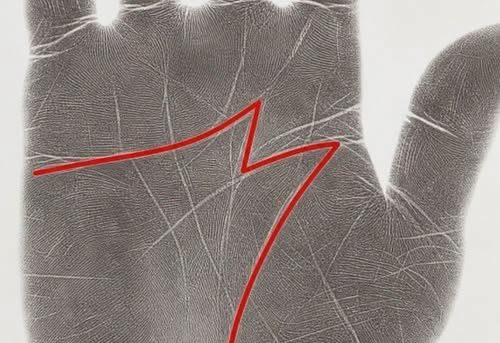
Did you know that having the letter in the palm of your hand means that See more

Your palm might be hiding a secret.
Some people say the letter “M” etched into your hand marks you as rare, gifted, even destined. Others insist it’s nothing more than skin and coincidence.

Between myth and science, one question lingers: what does it truly mean if you see that shape staring back at you every ti… Continues…If your palm seems to form an “M,” it can feel like uncovering a private message written into your skin. In palmistry, that symbol is woven with ideas of intuition, courage, and leadership, but its real power may lie in what it invites you to notice about yourself. Looking closely at your hand slows you down long enough to ask: Do I trust my instincts? Do I act on my ideas? Do I tolerate dishonesty, or quietly resist it?

Science reminds us those lines are just creases that help you grasp the world. Yet the stories around them can still be useful when they spark honest reflection instead of blind belief.

The “M” can become a mirror: you decide whether its traditional meanings fit the way you actually live. In the end, your character isn’t carved into your palm; it’s carved into your choices, one decision, one risk, one act of integrity at a time.

SAD NEWS: 20 minutes ago in South Carolina, With a heavy heart, we must share some sad news about Vanna White…

The news broke like a punch to the chest. Vanna White, America’s television sweetheart, has been rushed to a South Carolina hospital after a sudden medical emergency, and early reports sound dire. Fans are stunned. Colleagues are shaken. Her family is asking for prayers as doctors fight to stabilize her condition. In living rooms across the country, people who grew up with her nightly smile are now refreshing their screens, desperate for any sign of hope. The silence from the hospital only deepens the dread, as whispers of “critical” and “uncertain” begin to spread. For millions, this doesn’t feel like just another headline—it feels heartbreakin… Continues…

For decades, Vanna White has been more than a game-show co-host; she has been a gentle constant in American life, a familiar face at the end of long days. News of her sudden medical crisis has triggered an outpouring of emotion, with social media timelines filling with old photos, favorite clips, and heartfelt stories from viewers who feel they’ve “known” her for years.

Former colleagues and celebrities have echoed the same themes: kindness, grace, and quiet professionalism behind the scenes.

As her family keeps vigil at the hospital, they have asked for privacy, but also for prayers and positive thoughts. Doctors have not released specific details, and until they do, the world waits—suspended between fear and hope. Whatever happens next, the depth of concern and love surrounding Vanna makes one thing painfully clear: her impact has reached far beyond the bright puzzle board and into the hearts of millions.

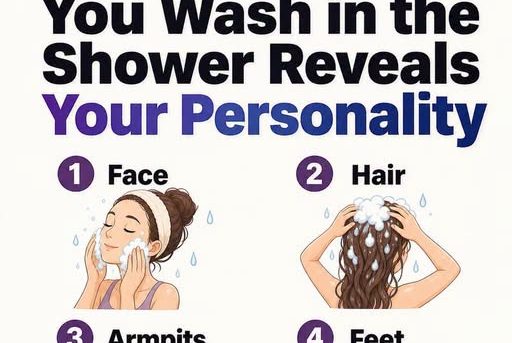
The Body Part You Wash First While Bathing Reveals Your Personality

The sequence in which a person washes different parts of their body in the shower can offer subtle insights into their personality traits. In particular, starting with either the hair or chest reveals different values and behavioral patterns.

When someone washes their hair first, it suggests that they are a person who thrives on discipline, order, and structure. The head is the highest part of the body and symbolizes intellect and control. This action often reflects a strong, practical mindset.

Individuals who begin with the hair tend to have firm opinions and are known for their punctuality. They manage their time well and prioritize intelligence over financial or superficial gains when choosing companions or friends.

These people are likely to be rational thinkers who believe in logic and planning. Their preference for organization may extend to all areas of life, including work, relationships, and personal goals. They function best in stable, structured environments.

What the Bible Says About Age Differences in Marriage

A claim that the Bible reveals one acceptable age difference between spouses sounds simple, but readers should ask where that number actually appears. A cultural preference, a family expectation, and a biblical command are different things. They should not be treated as interchangeable merely because a social media headline presents them together.

The New Testament’s discussion of marriage in 1 Corinthians 7 addresses commitment, responsibilities, separation, and remarriage. In verse 39, Paul discusses a widow’s freedom to marry again and places a condition on the faith of the person she chooses. That passage does not give a numerical age gap. Readers can examine the chapter themselves rather than relying on a caption that does not identify a verse. Read 1 Corinthians 7.

That distinction matters because an age difference tells only one part of a couple’s story. Two adults close in age may have very different priorities, while two adults born years apart may share important convictions and hopes. Neither observation automatically proves that a particular relationship is wise. It simply shows why reducing a serious decision to a number can leave the most important questions unanswered.

A useful conversation begins with the way the partners treat each other. Can both speak honestly without fear of punishment or ridicule? Does each person listen when the other disagrees? Are decisions made together, or does one person use money, experience, or social standing to control the other? These are practical questions about the relationship itself. They should not disappear behind a debate about birthdays.

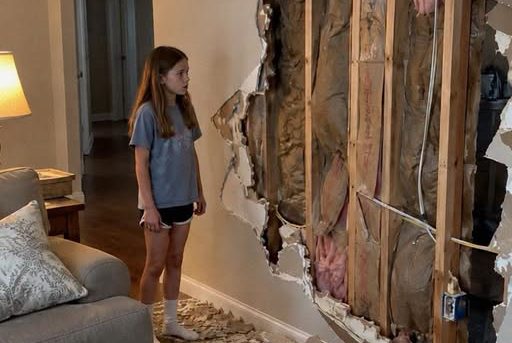
I Came Home to a Huge Hole in My Living Room Wall My Husband Called It an Accident Until Our 12 Year Old Pulled Me Aside

My husband destroyed part of our living room while I was at work, and expected me to believe a loose outlet was responsible. By dinner, our 12-year-old looked so nervous that I stopped worrying about the wall and started wondering what they were both keeping from me.

I came home on Tuesday afternoon and found a four-foot section of our living room wall missing.

The couch had been dragged three feet forward, and white drywall dust covered the rug.

Pieces of insulation sat in a neat pile beside the fireplace.

Civil Police Reconstruct the Fatal Fall After a Father Held His Baby

A baby’s death after a fall has left a family grieving while investigators attempt to establish what happened. The account centers on a father who had been holding his child and a moment that ended in an irreversible loss. What had been a family home is now also the setting of questions that must be answered carefully, without allowing assumptions to take the place of evidence.Family photo sessions

For those closest to the child, the event cannot be reduced to an investigation. The ordinary routines of caring for a baby have been interrupted by an absence that touches every part of the home. Objects that belonged to daily life, including a crib and the space prepared for the child, now carry a different weight. The loss exists before any official explanation and will remain after one is reached.

The father is described as devastated, replaying the moment when he was unable to keep his baby safe. That description conveys anguish, but anguish alone cannot explain the mechanics of a fall. Investigators have the separate responsibility of examining the sequence of events, listening to the people involved, and determining which details can be established.

Reconstructing a fatal incident requires distinguishing what someone directly witnessed from what they learned afterward. A relative may be able to describe one part of the evening without knowing what happened during another. Several accounts can contribute to a timeline without any single person holding the entire picture. The purpose of comparing those accounts is to understand their relationship, not to force them into a conclusion chosen in advance

A Viral Mystery Sparks Debate Why Online Stories Arent Always What They Seem

In the age of social media, a single image can capture the attention of millions within hours. A dramatic photograph, an incomplete headline, and a promise of shocking details are often enough to trigger a wave of clicks, comments, and shares. Recently, one such viral post featuring a young woman and an apparent interaction with law enforcement generated significant online discussion.Stock photo library

The post used an intentionally incomplete caption, encouraging viewers to click for more information. As is often the case with viral content, the mystery itself became part of the attraction. People wanted answers. What happened? Why was the woman being detained? Was the story as dramatic as the headline suggested?

However, as media experts frequently point out, a compelling image does not automatically provide the full truth. In many cases, viral posts are designed to create curiosity rather than deliver complete information. Without verified details, photographs alone cannot establish what actually occurred.

Social media platforms reward engagement. The more a post surprises or shocks people, the more likely it is to be shared. This creates an environment where dramatic headlines often spread faster than verified reporting.READ MORE BELOW

From Boy to Prisoner: The Shocking 452-Year Sentence That Silenced the Nation

The hammer didn’t just fall. It crushed a life. One teenager, four hundred and fifty-two years, and a courtroom that felt more like an execution chamber than a hall of justice. Some called it closure. Others called it barbaric. As the sentence echoed across a divided nation, one question refused to di… Continues…

In the quiet after the uproar, the sentence remained, immovable and surreal, a number that mocked the limits of human life. Families of the victims clung to it as the only proportionate answer to an unfathomable loss, a symbolic fortress built against the chaos that had shattered their worlds. For them, anything less felt like betrayal, as if mercy toward the offender meant erasing the dead. Their pain demanded something vast enough to hold it, and the law, in its blunt arithmetic, tried to oblige.

But beyond the courtroom, unease spread. A boy, however broken or dangerous, had been declared beyond all possible return, his future preemptively erased. Critics saw in that decision a frightening confession: that we no longer believe in our own capacity to heal, to rehabilitate, to risk hoping that people can change.

The 452-year sentence became more than a punishment; it became a mirror. In it, we saw a society terrified of its wounded, quicker to bury than to rebuild, more comfortable with symbolic eternity than with the fragile, uncertain work of redemption.

Shattered At The Gas Station

The day they left me in the desert was supposed to break me. Their laughter, the cameras, the dust—every second engineered for clicks and cruelty. I was never a wife, just “content.” No water. No phone. No mercy. I could have stayed on that burning curb and died in pieces. Instead, I stood up, stuck out my thumb, and wal… Continues…

The ride I caught that day carried me far beyond the highway. It took me into a life where my name, my choices, and my safety belonged to me again. In Aunt May’s weather-beaten town, I learned how to exist without performing, how to be seen without being consumed. Martha’s Diner gave me a front-row seat to ordinary kindness: the way a refill slid across the counter without strings, the way people asked questions and actually waited for answers.

Grant’s arrival—bloody, hunted, and stubbornly alive—reminded me that survival isn’t a personality trait; it’s a series of decisions. Testifying later, in that cold courtroom, I chose to turn my worst day into a weapon instead of a wound. I didn’t speak to destroy them; I spoke to protect the women they hadn’t reached yet. Walking out into the sunlight with Grant at my side, I understood: freedom isn’t forgetting what happened. It’s knowing it no longer owns the ending.READ MORE BELOW

I Boarded My Pilot Husbands Flight Then His Announcement

I Boarded My Pilot Husband’s Flight—Then His Announcement Exposed Everything
His voice was still coming through the overhead speakers when I finally understood who the announcement was really for, and I eased myself back into my seat.

Mason was still smiling beside me.

That was the worst part.

He was looking from the ceiling speaker to my face with the wide, electric excitement of a seven-year-old who believed his dad had just discovered our secret and was about to turn the whole flight into a story Mason would tell for years.READ MORE BELOW