Scope

My son got into a fight at school because another boy…

he lie didn’t crack. It detonated. In a school office that still smelled like pencil shavings and disinfectant, my “dead” son looked up at me with my own eyes. My husband called as another boy’s father. My name on an envelope I didn’t remember writing. My sister’s betrayal. Eight stolen years. One question no one dared answ… Continues…

I thought the worst thing that had ever happened to me was losing a child. It wasn’t. The worst thing was discovering I’d been forced to live inside a lie so enormous it had rewritten my memories, my marriage, my motherhood. My grief had been real; the funeral in my mind had been real. But my son had never been in that grave. He’d been learning to walk, to speak, to laugh in another woman’s arms, while I folded tiny clothes for a baby I believed I’d never hold.

The truth didn’t fix anything. It didn’t return birthdays or first days of school. It didn’t erase Mark’s cowardice or Rebecca’s unforgivable choice. But it did something smaller and stranger: it rearranged the future. Two boys sat shoulder to shoulder, sharing photographs and a knitted blue hat that should have belonged to them both.

My family would never be what it was supposed to be. Yet, as their identical laughter echoed through the house, I understood something brutal and beautiful: sometimes the truth doesn’t heal the past, it simply stops the bleeding long enough for you to start againREAD MORE BELOW.

My Fiancé Died Before Our Wedding—Then I Saw His Mother at Another Ceremony

The lie didn’t end at the funeral. It began there.
For three months, I woke up every day believing my fiancé was dead. I learned to breathe around the ache, to exist inside the silence he left behind. Then, at a stranger’s wedding, I saw his mother. I heard his voice. And the groom turned, wearing the suit meant for our wed… Continues…

I didn’t scream. I didn’t tear down the flowers I’d so carefully arranged. I just watched the man I’d buried stand there, alive, preparing to promise forever to someone who didn’t know who he really was. The betrayal wasn’t only that he left; it was that he let me grieve a ghost while he rehearsed a new life.

Telling his bride the truth wasn’t revenge. It was respect—for her, and finally, for myself. Walking out of that venue, I realized the future I’d mourned wasn’t stolen; it was revealed for what it was: fragile, conditional, built on a man who ran instead of spoke. I couldn’t reclaim the months I spent talking to a headstone, but I could claim everything after. I left without his answers, but with my own: I was more than the woman he abandoned. I was the one who chose herself.

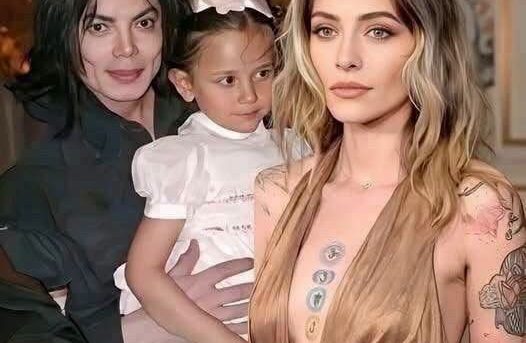
Paris Jackson: Crafting a Personal Identity and Artistic Path Beyond Her Famous Family Heritage

The world tried to script her life before she could even speak. Cameras, rumors, and expectations stalked her every move, turning childhood into a spectacle and pain into public property. But Paris Jackson refused to stay trapped inside her father’s shadow. Through sobriety, scars, and song, she is rewritin… Continues…

Growing up as Michael Jackson’s daughter meant Paris entered life as a symbol before she was allowed to be a person. In the years since, she has done the painstaking work of reversing that order. Choosing sobriety, committing to therapy, and confronting long-buried trauma, she has turned survival into a conscious, daily practice. Her six years of sobriety are not a headline to her, but a hard-won foundation for living on her own terms.

From modeling and acting to releasing her debut album Wilted, Paris has steadily shifted the conversation from her last name to her inner world. Her art is not an escape from her past, but a way of metabolizing it—transforming pain into something textured, intimate, and entirely her own. By insisting on boundaries, honoring her mental health, and building a life anchored in self-knowledge instead of legacy, she offers a quiet, powerful lesson: your origins may be public, but your healing can still belong to you.

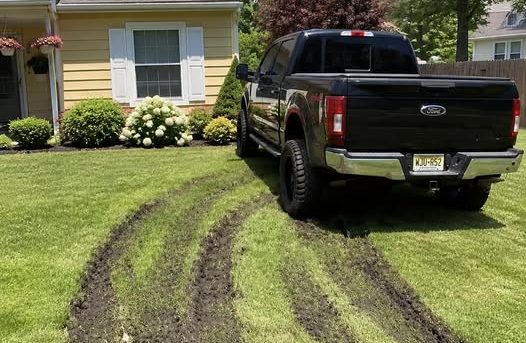
Silent Widow’s Ruthless Lesson

They thought she was lawn decor. They treated her memories like mud. They rolled a truck over fifty years of love and called it “just grass.” She almost chose revenge—the sharp, glittering kind. Instead, she chose something far more terrifying. Cameras. Paper trails. Consequences. By the time they realized who they were dealing wi… Continues…

She let them underestimate her because Harold had taught her that anger spent too quickly burns out before it does any good. Their contempt stung, but it also clarified things. She didn’t want to slash tires; she wanted something that couldn’t be swept away or repainted. So she built a quiet case instead of a noisy scene, choosing patient documentation over one furious, forgettable act.

Each small step—camera, survey, photos, estimates, letters—became a brick in a wall they never saw rising until they hit it. When the husband returned, suddenly polite, she answered with the same steady voice they’d ignored, backed now by laws and signatures. They paid, the truck vanished, and the scars in her lawn healed into deeper green. On her porch at dusk, tea cooling in her hand, she understood: they had tried to erase her, and she had replied by writing herself, indelibly, into the record.

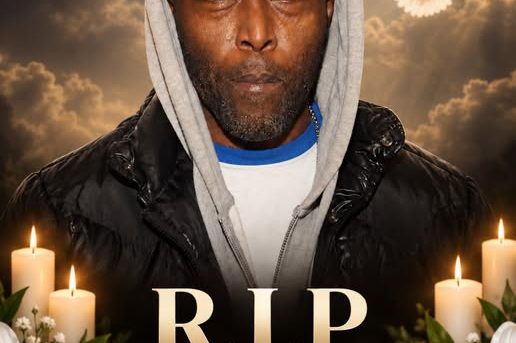
RIP: Bad Boy Records Artist Black Rob Dead at 51

RIP: Bad Boy Records Artist Black Rob Dies at 51, Leaving Behind a Lasting Hip-Hop Legacy

The hip-hop community suffered another heartbreaking loss in April 2021 when Black Rob, the rapper remembered for his signature hit “Whoa!,” died at 51.Born Robert Ross, Black Rob became closely associated with Bad Boy Records during an influential period in hip-hop. His deep voice, vivid storytelling, and recognizable delivery helped him establish an identity within the label’s celebrated roster.Black Rob gained attention during the 1990s, appearing on recordings connected to major Bad Boy artists. Collaborations with performers including Diddy, Faith Evans, Mase, and 112 helped introduce his distinctive style to a growing audience.His biggest breakthrough came with “Whoa!,” the song permanently connected to his name. The track appeared on his debut album, Life Story, released in 2000, and became a major success for the Harlem-based rapper.CONTINUESS…PART2

Life Story reached No. 3 on the Billboard album chart and eventually earned platinum status. The success established Black Rob as a recording artist rather than simply another supporting voice within Bad Boy Records.

He also appeared alongside Diddy and Mark Curry on “Bad Boy for Life.” Those appearances strengthened his association with the Bad Boy era and helped preserve his place in hip-hop history.

His personal and professional journey also included difficult periods. Legal problems and time in prison interrupted his career, and he eventually moved on from Bad Boy Records.

Even after leaving the label, Black Rob maintained connections with artists from that chapter of his life. In 2016, he joined the Bad Boy Family Reunion Tour, giving longtime fans an opportunity to see him perform again.

His health became increasingly fragile during his later years. Reports said he experienced serious medical problems, including lupus, kidney issues, diabetes, and strokes. His condition became a growing concern among fans and fellow musicians.

Shortly before his death, Black Rob appeared in a video discussing the passing of DMX. His appearance showed that he was dealing with significant health difficulties, prompting concern from people who remembered his contributions to hip-hop.

Black Rob died on April 17, 2021, in Atlanta. His longtime friend and former Bad Boy associate Mark Curry confirmed the news, leaving fans and fellow artists to reflect on his career.

His death came during a period when hip-hop was already mourning several influential figures. Tributes remembered not only “Whoa!” but also the distinctive voice and storytelling ability that made his music recognizable.

For many listeners, Black Rob represented an important part of Bad Boy Records’ late-1990s and early-2000s era. His music captured that period while giving him a style that remained uniquely his own.

Although his career faced setbacks, his recordings continued connecting with audiences long after their release. His contributions remain part of hip-hop’s evolution during a defining generation.

His influence reached listeners beyond “Whoa!” and continued across generations of hip-hop fans. The rapper whose unmistakable voice became synonymous with “Whoa!” and one of Bad Boy Records’ most memorable eras was Black Rob.
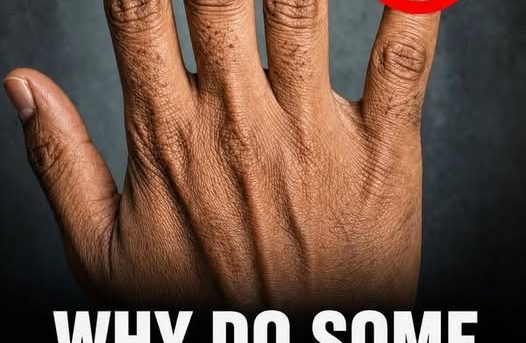
How to Strengthen and Grow Your Nails Using Apple Cider Vinegar

Start by washing your fingers and drying them completely. Getting rid of any varnish residue is equally critical.Second, dampen a cotton swab with cider vinegar; for added antimicrobial power, you may add a few drops of citrus essential oil.To apply this mixture, just softly tap your nails; thereafter, wipe off any excess from the cuticles. After that, do it again three times weekly until you get the desired outcome by letting it dry in the open air.Those who have a habit of biting their nails can also benefit from using it topically.

The First Queen of Country Music, Dead at 85

Her final journey began before dawn.
A son’s trembling words, a nation’s broken heart, and a legend’s last breath.
Pongsri Woranuch, the irreplaceable voice of Thai country music, is gone—but the echoes refuse to fade.
Hospital rooms, sleepless nights, whispered prayers… and then the “last express tra…” Continues…

In a quiet house before sunrise, Pongsri Woranuch slipped away, leaving Thailand to awaken to a silence it had never known. For decades, her voice carried the dust of rural roads, the ache of migration, the pride and sorrow of ordinary people. She did not just sing Luk Thung; she helped define it, shaping a sound that became the soul of a generation.

Her son’s farewell—calling her final departure “the last express train”—captured the tenderness and exhaustion of a long battle with illness, fought mostly out of public view. As fans flooded social media with old album covers, grainy concert clips, and memories of parents humming her songs in dim kitchens, it became clear that her passing was not just the loss of a singer, but of a living archive of feeling. Her body is gone; her voice, stubbornly, is not.

What Daily Coffee May Do to Your Body — Insights on Hormones, Heart, and Sleep

The coffee in your hand is not as innocent as it looks. It’s quietly shaping your mood, your focus, even your long-term health. One sip at the wrong time can drain you. One sip at the right time can transform your day. Your morning ritual is either working for you… or slowly agai… Continues…

Your morning coffee ritual can become a powerful ally instead of an unconscious habit. Start by paying attention to timing: letting your body wake naturally for an hour before your first cup often leads to steadier energy, fewer jitters, and less afternoon crash. Notice how you feel on days you wait versus days you drink immediately; your own body will confirm the difference.

Then, treat each cup as a choice, not a reflex. Sip slowly, without multitasking, and let it mark the beginning of focused work, creative thinking, or meaningful conversation. Choose quality beans, avoid loading your mug with sugar, and stop before coffee becomes background noise. When you align what’s in your cup with when and why you drink it, coffee stops being a crutch—and becomes a deliberate ritual that supports the life you’re trying to build.

BREAKING NEWS JOE BIDEN GETS STABBED

Representative Ilhan Omar just crossed a line most politicians won’t even approach. She says she believes Tara Reade’s 1993 sexual assault allegations against Joe Biden… and still plans to vote for him. A survivor believed. An alleged abuser backed. A democracy hanging on a lesser-evil bargain. This is the moral collision no one wan… Continues…

Ilhan Omar’s stance forces a confrontation with the brutal compromises buried inside American politics. By openly stating she believes Tara Reade while still supporting Joe Biden to block Donald Trump, she exposes a system where survivors’ truths are acknowledged, then carefully set aside in the voting booth. Her position is not clean, triumphant, or easy to defend; it is a choice made in the shadow of two unacceptable options.

Instead of pretending the allegation never existed, Omar insists that justice delayed must not become justice erased. She is effectively saying: we can oppose Trump, vote for Biden, and still refuse to launder his past. That tension is the point. It leaves voters staring at their own thresholds—how much harm, how much hypocrisy, how much pain they are willing to absorb in the name of preventing something worse.

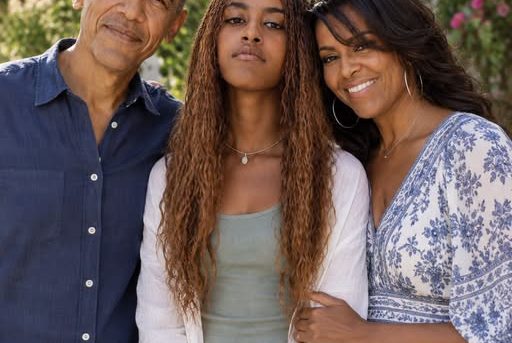
20 Minutes ago in Los Angeles , Malia Obama was confirmed as…See more

Malia Obama just changed everything.
In Los Angeles, in front of cameras and a stunned crowd, she broke her silence with a decision no one saw coming.
Some are calling it brave. Others say it’s a betrayal.
Her parents’ legacy, her own future, her entire public image—suddenly on the li… Continues…

When Malia Obama stepped onto that Los Angeles stage, there was no familiar political script, no carefully managed family moment—just her own voice. Calm but visibly emotional, she announced she would be fully stepping into the public eye on her own terms: launching a long-rumored creative career in film and storytelling, while openly distancing herself from any expectation of running for office. She spoke about the pressure of growing up as “America’s first daughter,” the weight of constant comparisons, and her refusal to live as a symbol instead of a person.

The reaction was instant and polarized. Supporters praised her courage to reject a prewritten destiny; critics accused her of turning her back on duty and legacy. Yet beneath the noise, one truth cut through: Malia Obama had drawn a line between who the world wanted her to be and who she chose to become—and, for the first time, she seemed entirely, unmistakably herself.